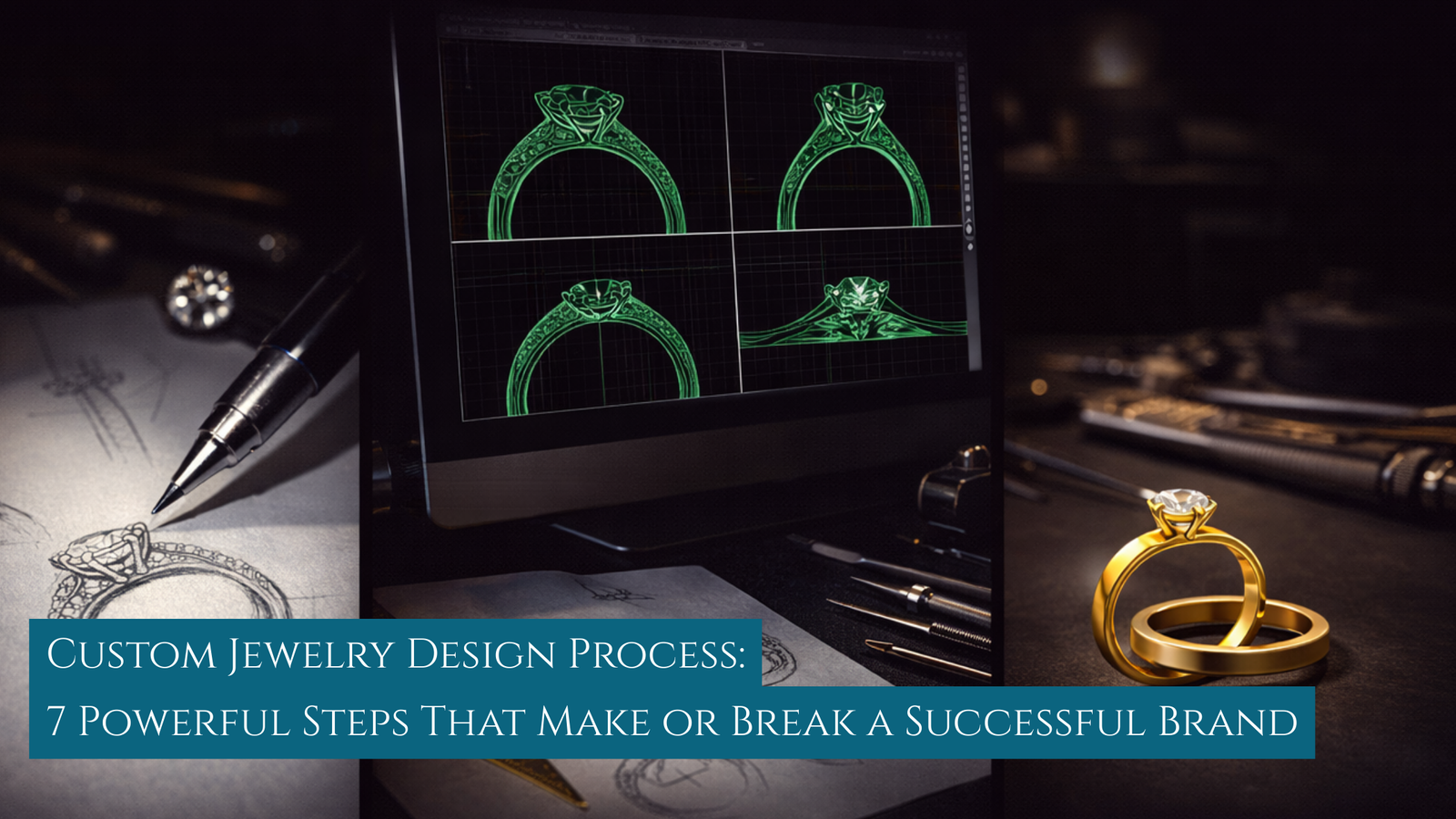
Custom Jewelry Design Process is the foundation of every successful private-label and wholesale jewelry brand.
Behind every bestselling piece is a clear, strategic journey – from the first idea to a production-ready design.
For B2B buyers, retailers, and designers, understanding this process helps avoid delays, cost overruns, and design mistakes.
In this guide, we break down each step clearly and practically, based on real-world manufacturing workflows used by professional jewelry manufacturers like Zona Creation.
Understanding the Custom Jewelry Design Process
The custom jewelry design process is a structured workflow that transforms an idea into a manufacturable product.
It balances creativity, engineering, cost efficiency, and market demand.
For B2B buyers, this process ensures:
- Design consistency
- Production accuracy
- Predictable timelines
- Scalable manufacturing
Skipping steps often leads to costly errors later.
Step 1: Concept Development & Brand Vision
Every custom jewelry project starts with clarity.
At this stage, brands define:
- Target customer
- Price range
- Jewelry category (rings, necklaces, bracelets)
- Metal type and finishing style
This step sets the direction for the entire custom jewelry design process.
A clear concept saves time and avoids redesigns later.
Step 2: Inspiration Boards & Market Research
Inspiration boards help visually align expectations between the brand and the manufacturer.
They often include:
- Reference jewelry styles
- Textures and finishes
- Stone shapes and settings
- Color palettes
Market research ensures the design aligns with current demand and retail trends.
Helpful industry references include:
- DoFollow: https://www.jckonline.com
- DoFollow: https://www.nationaljeweler.com
This research phase strengthens the commercial success of the final design.
Step 3: Hand Sketches & Design Refinement
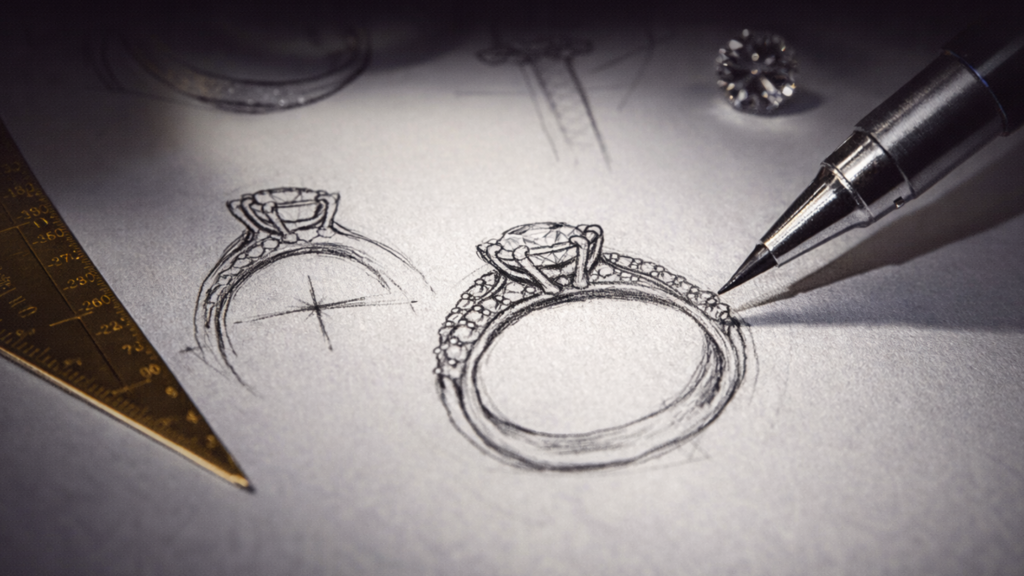
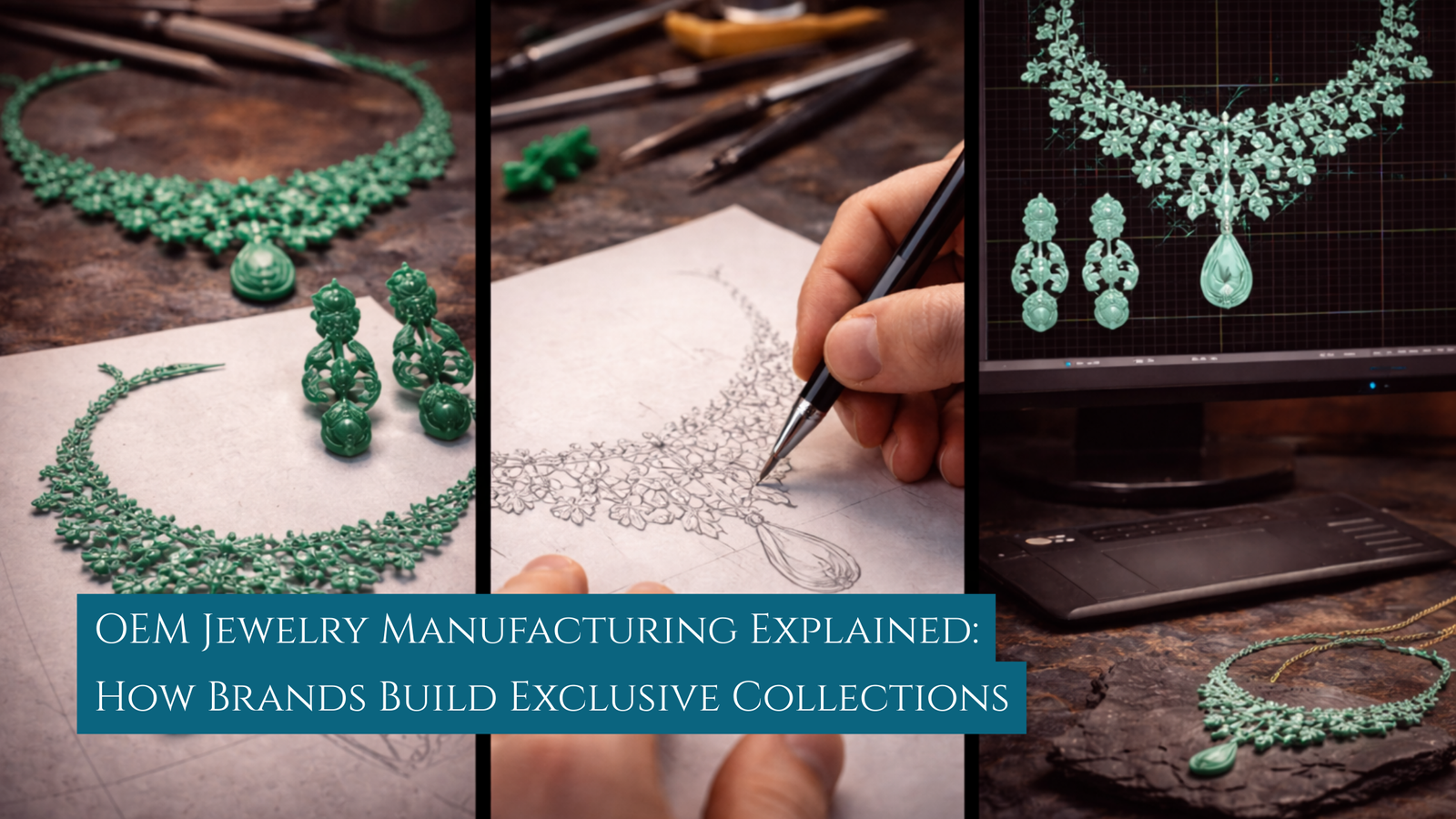
Once the concept is approved, designers create detailed hand sketches.
These sketches define:
- Proportions
- Stone placement
- Setting styles
- Structural details
Sketches allow quick adjustments before technical modeling begins.
This step keeps the custom jewelry design process flexible and cost-effective.
Step 4: CAD Modeling for Precision Manufacturing
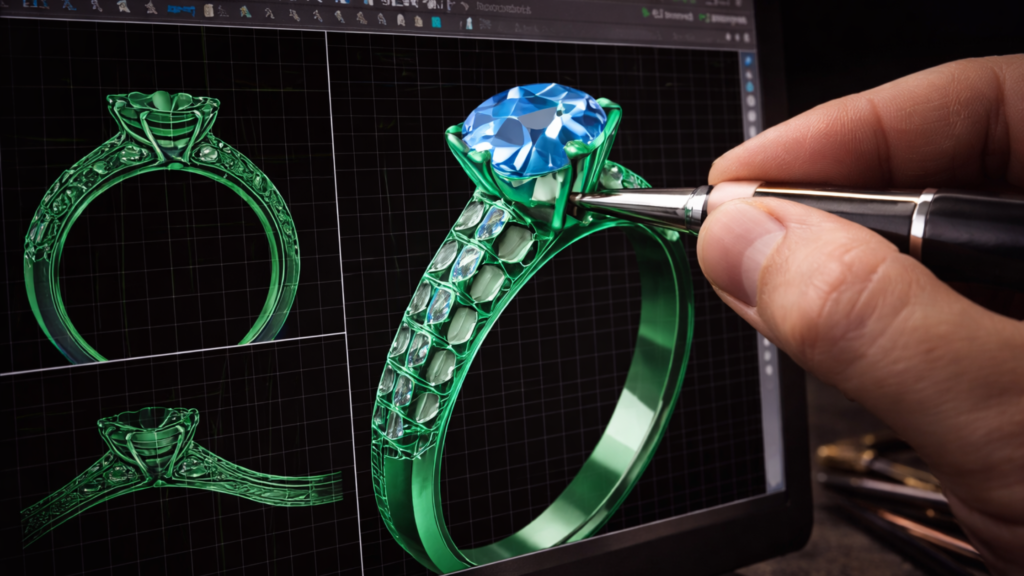
CAD (Computer-Aided Design) transforms sketches into precise 3D models.
This is a critical phase of the custom jewelry design process.
CAD models help:
- Visualize the final product accurately
- Measure metal weight
- Test stone fit
- Detect structural weaknesses
High-quality CAD reduces production risks and ensures design accuracy.
Learn more about CAD in jewelry manufacturing:
- DoFollow: https://www.gia.edu
Step 5: Prototyping & Sample Creation
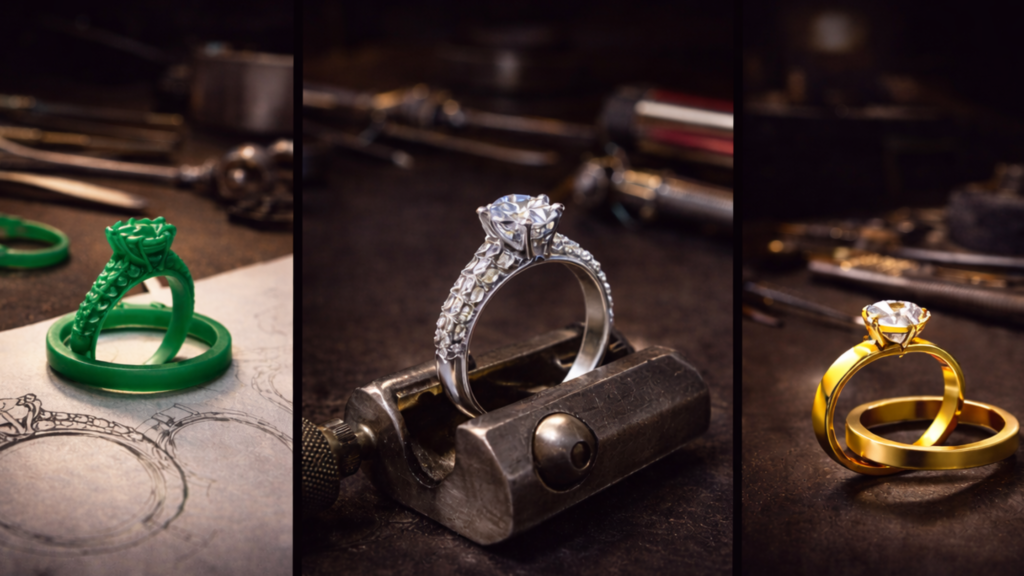
After CAD approval, a physical prototype is created.
Prototypes allow brands to:
- Feel weight and balance
- Check comfort and wearability
- Review stone setting quality
- Evaluate finishing details
At Zona Creation, prototyping bridges the gap between digital design and real-world production.
This step prevents expensive mass-production mistakes.
Step 6: Design Review, Revisions & Costing
Once the prototype is ready, brands review the piece carefully.
Typical review points include:
- Overall appearance
- Stone alignment
- Finish quality
- Cost feasibility
Revisions are normal and expected in the custom jewelry design process.
At this stage, final pricing and production timelines are also confirmed.
Step 7: Final Design Approval for Production
Final approval means the design is locked and ready for manufacturing.
This includes:
- Approved CAD files
- Final prototype sign-off
- Confirmed materials
- Production-ready specifications
Only after this step does bulk production begin.
A structured approval process ensures consistent quality across every piece.
Why a Structured Custom Jewelry Design Process Matters
For B2B buyers and private-label brands, structure equals reliability.
A well-managed custom jewelry design process delivers:
- Faster time to market
- Controlled production costs
- Reduced design errors
- Stronger brand identity
Manufacturers that follow a disciplined process become long-term partners, not just suppliers.
Explore Zona Creation’s full manufacturing capabilities on our
👉 Products & Services page
You may also find value in our related article on jewelry production planning in the Blog section.
Turn Your Jewelry Ideas into Market-Ready Designs
A successful jewelry collection doesn’t happen by accident.
It is built through a clear, professional custom jewelry design process that respects creativity, engineering, and commercial reality.
At Zona Creation, we work closely with brands, wholesalers, and retailers to turn ideas into scalable, high-quality jewelry collections.
If you’re planning your next custom or wholesale jewelry project, we’d love to help.
👉 Contact Zona Creation today to start your custom jewelry journey with confidence.
Frequently Asked Questions (FAQs)
The custom jewelry design process is a step-by-step workflow that turns a jewelry idea into a production-ready design. It includes concept development, sketches, CAD modeling, prototyping, revisions, and final approval before manufacturing begins.
For most B2B projects, the custom jewelry design process takes between 2 to 6 weeks, depending on design complexity, number of revisions, and prototyping requirements.
CAD allows manufacturers to create precise 3D jewelry models before production. It helps calculate metal weight, ensure stone accuracy, and reduce costly manufacturing errors during the custom jewelry design process.
Yes. Revisions are a normal part of the custom jewelry design process. Brands can request adjustments after reviewing the prototype to improve comfort, appearance, or cost efficiency before final approval.
To begin the custom jewelry design process, brands should share:
- Reference images or sketches
- Target price range
- Metal and finish preferences
- Quantity expectations
Clear input helps speed up development and reduce revisions.